 Business License

How to Integrate a Pedestal Rock Breaker Boom System with Crushers and Screens?
How to Integrate a Pedestal Rock Breaker Boom System with Crushers and Screens?
Enhancing Control, Safety, and Productivity Through Radio Remote Operation
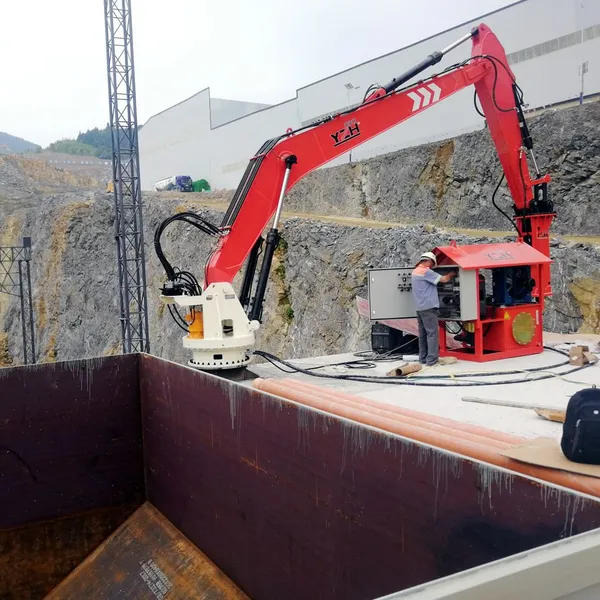
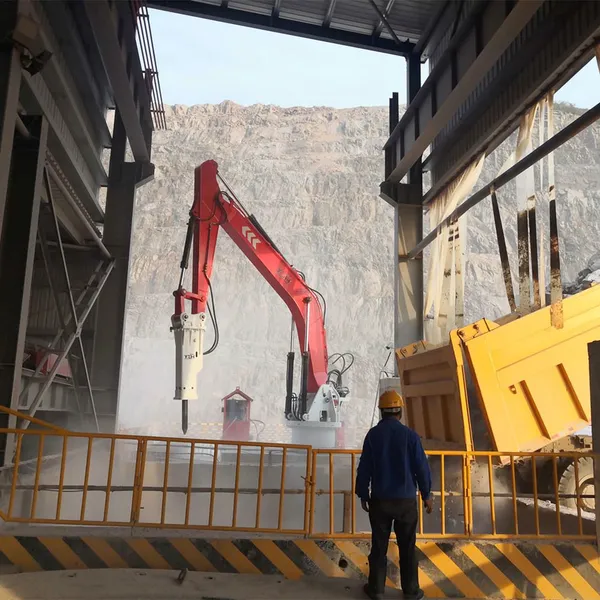
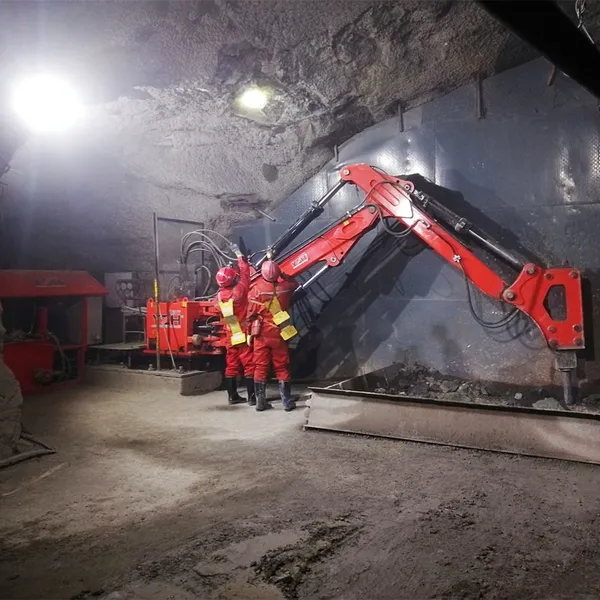
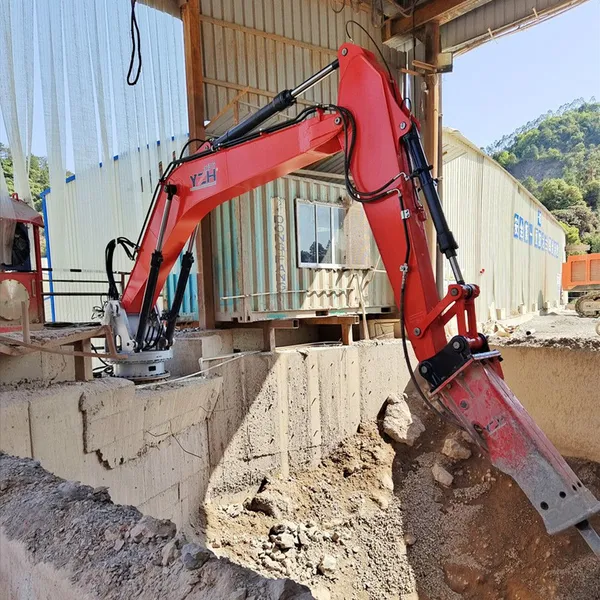
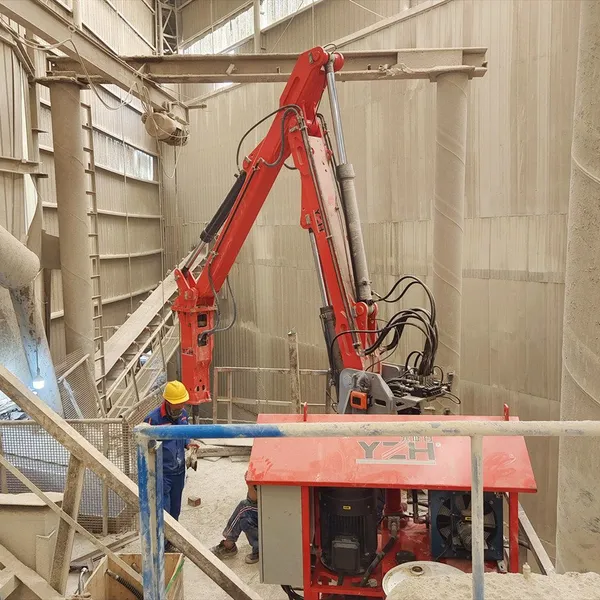
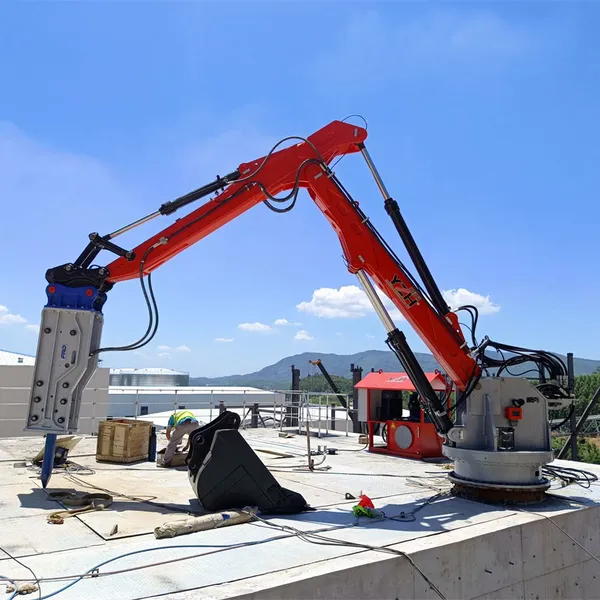
In crushing and screening plants, material flow efficiency is critical. Oversize rocks, bridging, and blockages at crusher inlets or grizzly screens can disrupt operation, increase wear on equipment, and expose personnel to safety risks. A pedestal rock breaker boom system, when properly integrated with crushers and screens, provides a reliable and permanent solution.
This article explains how pedestal rock breaker boom systems are integrated into crushing and screening circuits, and how radio remote control system significantly enhances operational efficiency, safety, and responsiveness.
Understanding Integration in Crushing and Screening Operations
Integration does not simply mean placing a rock breaker near a crusher. Proper integration involves:
1. Strategic positioning relative to crushers and screens
2. Mechanical compatibility with existing structures
3. Hydraulic and electrical system coordination
4. Control integration with plant operations
5. Safe and efficient operator access
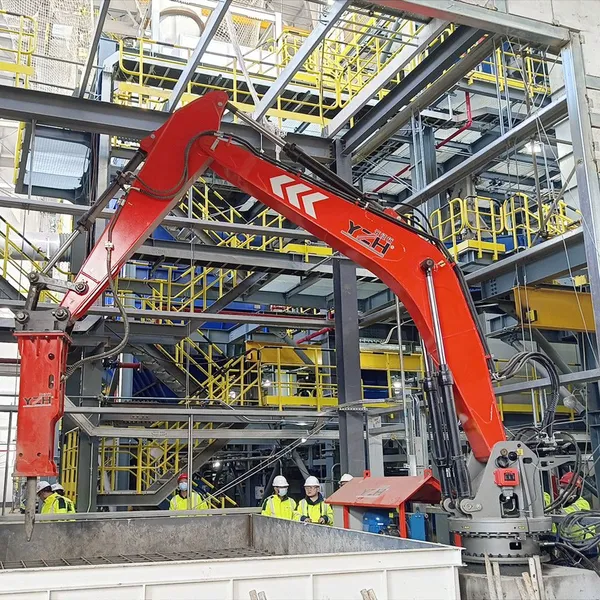
When designed correctly, pedestal rock breaker boom system becomes an extension of the crushing system—not a standalone accessory.

Common Integration Points in Crushing and Screening Plants
1. Crusher Feed Openings
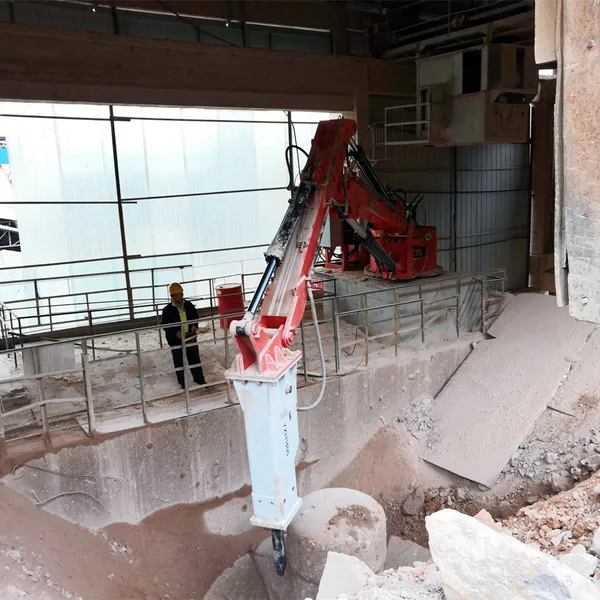
The most common installation point is above or beside the primary crusher feed opening. Oversize rocks that cannot enter the crusher are broken in place before causing a shutdown.
Integration considerations:
①Boom reach must fully cover the crusher mouth
②Breaker energy must match rock size and hardness
③Pedestal must be isolated from crusher vibration
2. Grizzly Screens and Scalping Screens
Grizzly screens frequently experience material bridging. A pedestal rock breaker boom system positioned above the grizzly allows operators to break oversize rocks without stopping conveyors.
Integration considerations:
①Precise boom articulation to avoid screen bar damage
②Controlled breaker force for selective breaking
③Clear sightlines for remote operation
3. Transfer Chutes and Hoppers
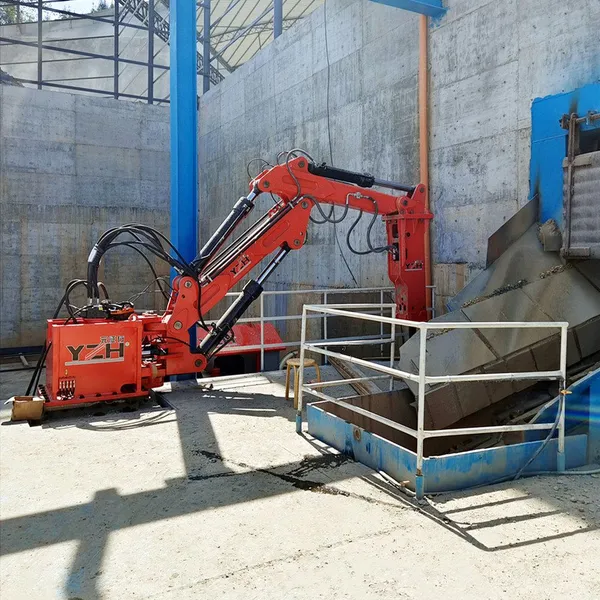
Blockages in chutes and hoppers can halt downstream processing. Pedestal rock breaker boom systems installed at these locations allow quick intervention.
Integration considerations:
①Compact boom design for confined spaces
②Sealed components to resist dust and material buildup
③Remote access where visibility is limited
Structural and Mechanical Integration
Pedestal and Foundation Design
The pedestal must be designed to:
1. Absorb breaker impact loads
2. Prevent vibration transfer to crushers and screens
3. Fit existing plant layouts
Foundations are typically reinforced concrete or steel structures, engineered to match both static and dynamic loads.
Boom Geometry and Coverage
Proper boom geometry ensures:
1. Full coverage of the target area
2. No interference with crushers, liners, or screens
3. Efficient breaking without repositioning
Custom boom lengths and articulation angles are often selected during the integration phase.

Hydraulic and Control System Integration
Hydraulic Power Coordination
Pedestal rock breaker boom system can operate using:
1. A dedicated hydraulic power unit, or
2. Integration with the plant's central hydraulic system
Flow rate, pressure stability, and cooling capacity must be matched to continuous-duty requirements.
Control System Alignment
The system can operate independently or be integrated into the plant's control philosophy. This ensures rock breaking does not disrupt normal crushing and screening operations.
Advantages of Radio Remote Control System
Why Radio Remote Control System Matters
Traditional fixed control stations limit operator visibility and increase response time. Radio remote control system fundamentally changes how rock breaker boom systems are used.
With radio remote control system, operators can:
1. Move freely to the best viewing position
2. Respond immediately to blockages
3. Operate without stopping conveyors or crushers
4. Stay clear of hazardous zones

Improved Precision and Efficiency
Radio remote control system allows operators to:
1. Position the boom more accurately
2. Apply breaker force only where needed
3. Avoid unnecessary impacts on equipment
This precision reduces wear on crushers, screens, and structural components.
Enhanced Safety in High-Risk Areas
Crushing stations are inherently dangerous environments. Radio remote operation enables:
1. Operation from a safe distance
2. Reduced exposure to falling rocks and dust
3. Elimination of manual intervention near live equipment
This significantly improves compliance with modern safety standards.
Faster Response, Less Downtime
Because the pedestal rock breaker boom system is always in position and immediately accessible:
1. Blockages are cleared in minutes
2. Full plant shutdowns are avoided
3. Production flow remains uninterrupted
Over time, this leads to measurable improvements in plant availability and throughput.

Best Practices for Successful Integration
To maximize the benefits of integration with crushers and screens:
1. Select boom reach and breaker size based on crusher geometry
2. Design pedestal foundations to isolate vibration
3. Ensure clear visual access for remote operation
4. Train operators specifically for radio remote control use
5. Coordinate breaker operation with plant maintenance schedules
Operational Impact and Long-Term Value
Properly integrated pedestal rock breaker boom system delivers:
1. Higher crusher utilization
2. Reduced unplanned downtime
3. Lower maintenance and repair costs
4. Improved operator safety
5. Greater operational flexibility
When combined with radio remote control system, pedestal rock breaker boom system becomes a highly responsive, safety-focused, and productivity-enhancing component of the crushing and screening circuit.
Conclusion
Integrating a pedestal rock breaker boom system with crushers and screens is not just about breaking rocks—it is about maintaining continuous production, protecting critical equipment, and ensuring operator safety.
With thoughtful mechanical integration and the added advantage of radio remote control system, pedestal rock breaker boom system enables faster response to blockages, safer operation, and smoother material flow across the entire plant.
For modern crushing and screening operations seeking efficiency, safety, and reliability, a properly integrated pedestal rock breaker boom system is a strategic and essential investment.
Recently Posted
-
Sustainability and Energy Efficiency in Modern Rock Breaking
February 6, 2026Sustainability and Energy Efficiency in Modern Rock BreakingHow Pedestal Rock Breaker Boom Systems Support Greener and Smarter Cru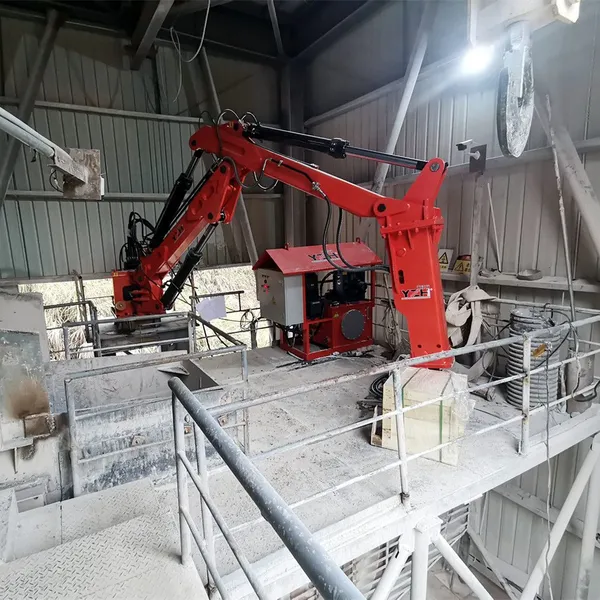 Read More
 -
Training Operators for Maximum Efficiency and Safety
February 6, 2026Training Operators for Maximum Efficiency and Safety Why Skill, Not Just Equipment, Determines Rock Breaking PerformanceIn cr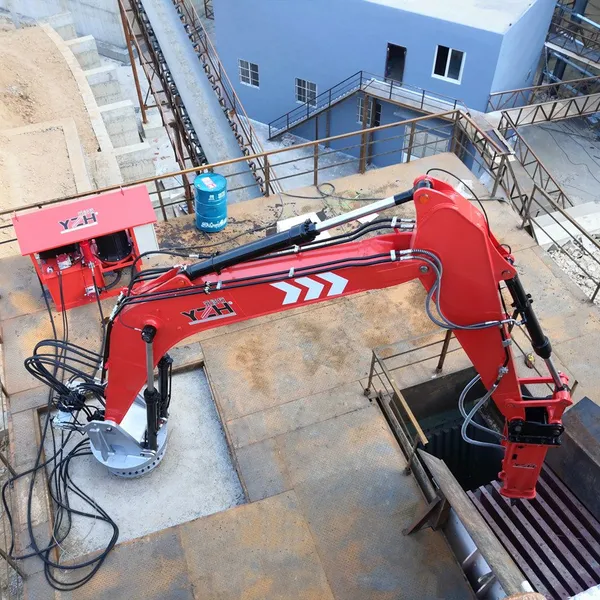 Read More
 -
Downtime Cost Analysis: Manual vs. Mechanized Rock Breaking
January 30, 2026Downtime Cost Analysis: Manual vs. Mechanized Rock Breaking Understanding the True Cost of Crusher BlockagesIn crushing opera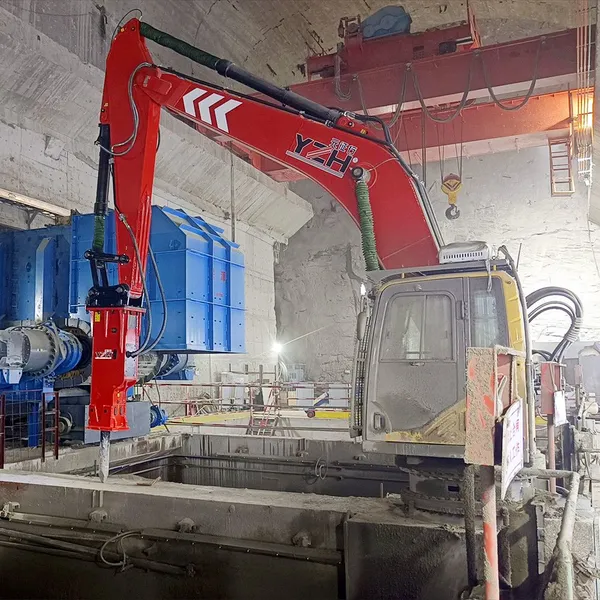 Read More
 -
Eliminating Manual Intervention Around Crushers
January 29, 2026Eliminating Manual Intervention Around CrushersReducing Human Exposure in High-Risk ZonesIn crushing operations, the most dangerou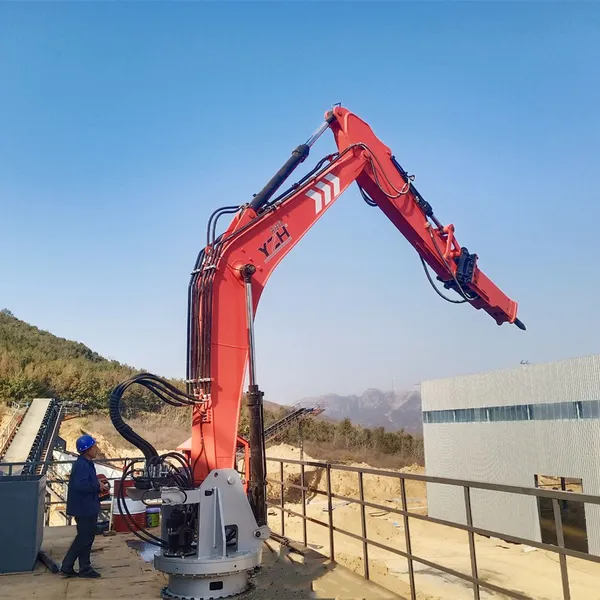 Read More

Contact Us
Recommended Products
-
 Fixed Rock Breaker Boom SystemUS$ 40000 - 80000MOQ: 1 Set
 -
Pedestal Rock Breaker Boom SystemUS$ 40000 - 80000MOQ: 1 Set
-
Stationary Rock Breaker Boom SystemUS$ 40000 - 80000MOQ: 1 Set
-
Static Rockbreaker Boom SystemUS$ 40000 - 80000MOQ: 1 Set
-
Fixed Rockbreaker Boom SystemUS$ 40000 - 80000MOQ: 1 Set